Commercial Door Supplier in Woodland Hills, California for Offices

Wood Door Supplier in Woodland Hills, California for Custom Homes
December 3, 2025
Exterior Door Supplier in Woodland Hills, California for Curb Appeal
December 3, 2025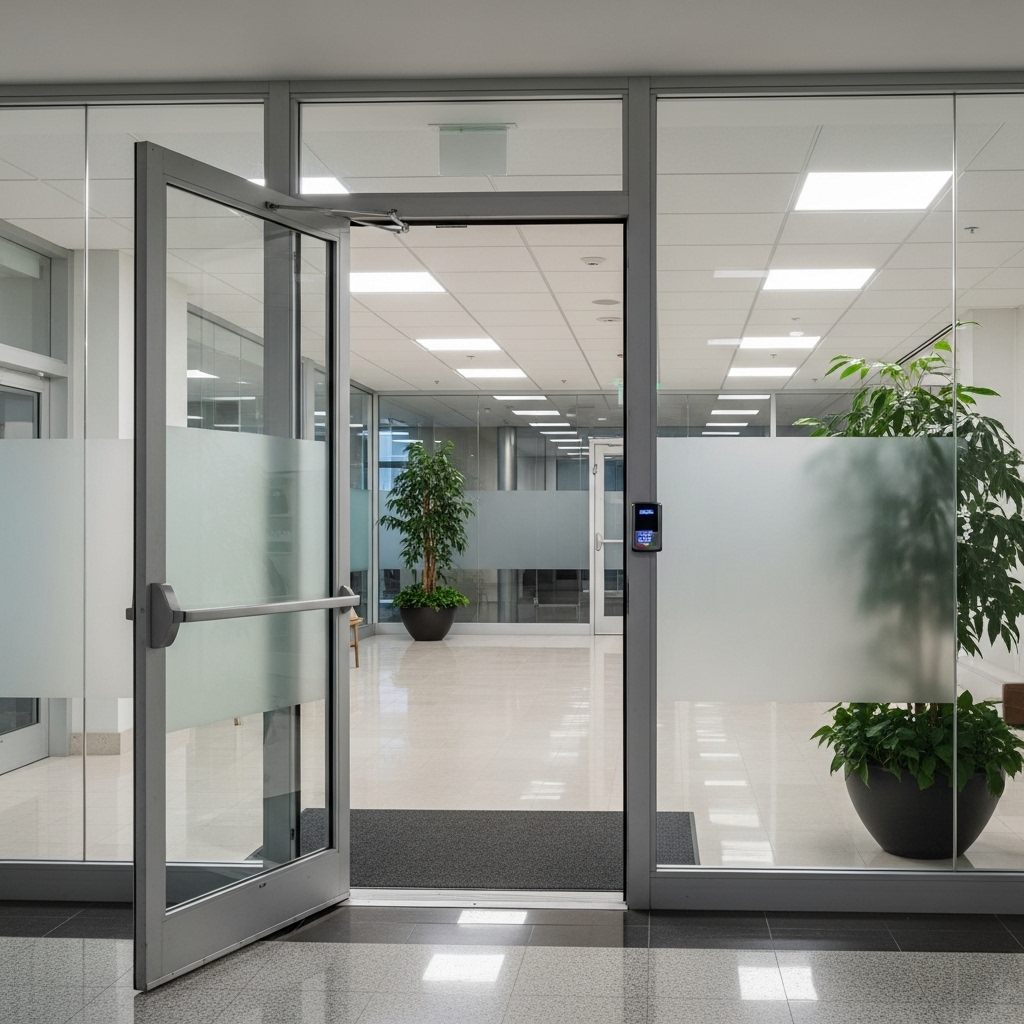
Office spaces in Woodland Hills have their own rhythm—morning rushes, quiet mid-day focus, and late-evening cleanups. The doors that guide people through lobbies, conference rooms, and private suites must handle constant use, present a professional image, and meet code requirements without calling too much attention to themselves. That balance of durability, compliance, and design is where a specialized local partner becomes essential. As a Woodland Hills door supplier, we support office projects from early planning through final punch, ensuring the right door and hardware package fits the space, the schedule, and the brand.
In this part of the Valley, office buildings range from glassy contemporary structures to renovated low-rise campuses with tree-lined courtyards. Tenants bring unique needs: some want transparent, daylight-filled interiors that encourage collaboration; others prefer quiet suites with strong acoustic separation for client calls and focused work. We help align door selection with these priorities while keeping life-safety, accessibility, and maintenance front and center.
Planning Around Codes and Practicalities
Commercial doors have jobs to do beyond looking good. They control occupant flow, compartmentalize smoke and fire, and provide secure access. Early in design, we review occupancy types and door locations to pair the right rating, swing, and hardware. For corridors and stairwells, rated doors and frames with listed hardware are critical. For tenant entries, we coordinate closers and access control preps so that badges, keypads, or mobile credentials integrate cleanly without last-minute field improvisation. In restroom and breakroom areas, we select materials that resist moisture, clean easily, and stand up to frequent use.
Accessibility is non-negotiable. Clearances at pulls, opening forces, closer speeds, and lever shapes all matter to ensure everyone can move through the space independently. We balance these requirements with the architect’s aesthetic goals, so an elegant minimalist lever still feels comfortable to use and complies with the rules.
Materials That Work for Offices
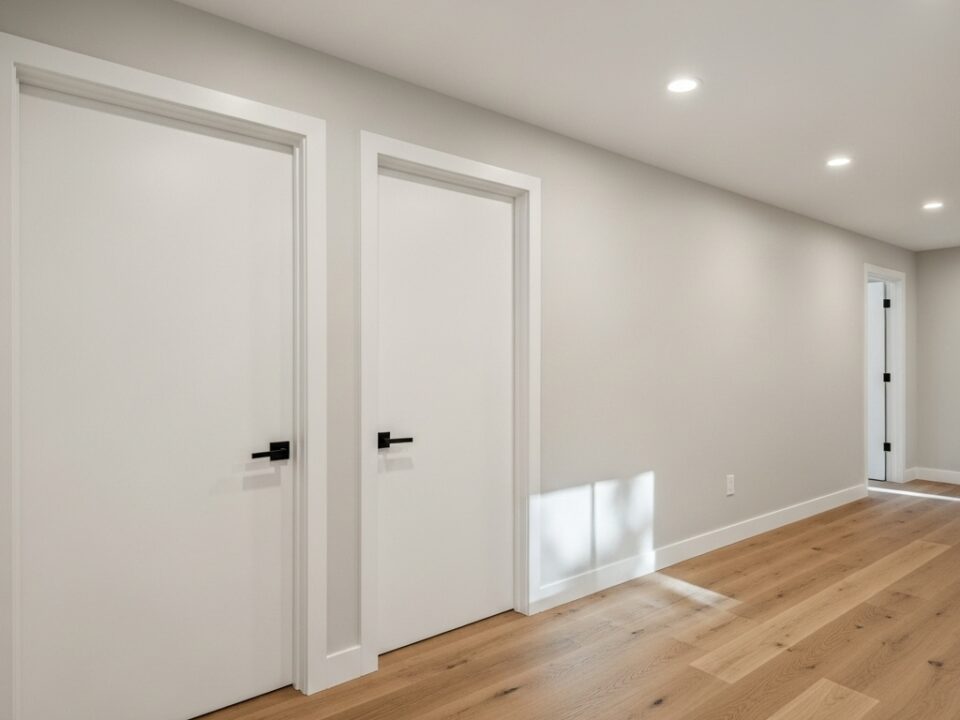
The material mix often includes hollow metal for stair and core doors, aluminum storefront for entries and conference fronts, and solid-core wood or laminate-faced doors for interiors. In office suites that value quiet, we specify solid cores with perimeter seals to tame noise from corridors. Where daylight is paramount, glazed doors with narrow stile-and-rail profiles keep sightlines open while offering privacy options through films or patterned glass.
Durability is particularly important in copy rooms, supply closets, and areas where carts move frequently. Metal edges or impact-resistant laminates on door faces prevent damage from day-to-day bumps. In high-traffic lobbies, we coordinate large pulls and floor stops to protect doors and walls. Cleanability also plays a role; surfaces that resist fingerprints and sanitize well make ongoing maintenance easier for building staff.
Hardware Coordination and Access Control
Commercial hardware is a system, not a collection of parts. Levers, closers, hinges, exit devices, strikes, and readers must work together. We produce hardware schedules that assign each opening a complete set of components, annotated with functions and finishes, so the installer and security integrator can work from a common plan. If an HR suite requires entry control after hours, we ensure the lock function pairs with the access system and that the door will relock reliably after each use. For glass conference rooms, we coordinate patch fittings, rails, and soft-close pivots for a clean look without sacrificing safety.
Acoustic goals often intersect with hardware decisions. Meeting rooms benefit from perimeter seals and automatic bottoms on doors to limit sound spill. Closers with adjustable sweep and latch speeds keep doors from slamming while maintaining secure closure. And for stair doors, we work through hold-open strategies that meet life-safety requirements while enabling free movement during the day.
Tenant Improvements and Phased Work
Many Woodland Hills office projects happen in active buildings. That means careful sequencing and clear communication to minimize disruption. We label and stage materials by phase, coordinate with building management on delivery timing, and protect finished surfaces from dust and traffic. Door and frame installation often forms the backbone of the interior schedule; getting it right keeps the whole project moving. When a tenant’s brand requires a specific veneer, stain, or laminate, we source samples early and confirm acceptance so fabrication can proceed without delay.
Field conditions always present surprises: a wall slightly out of plumb, a rough opening undersized, a last-minute change to security hardware. Our on-site support and flexible planning help the team adapt. That responsiveness is what sets apart a local partner who knows these buildings and has relationships with the trades who work in them every day.
Design Identity and First Impressions
Front doors set the tone for visitors and for staff who arrive each morning. We craft entries that align with a company’s brand—sleek metal and glass for tech firms, warm wood veneers for professional services, or bold colors and oversize pulls for creative studios. Inside, we align door lite patterns with the rhythm of storefront mullions, so the sightlines feel consistent from lobby to conference rooms. Even small details—lever shape, escutcheon size, and closer arm selection—contribute to the perception of quality.
In open offices that rely on glass fronts, privacy is still possible without sacrificing light. We work with patterned, frosted, or interlayered glass and coordinate with designers on film placement to create zones of clarity and obscurity as needed. The result is a workplace that feels both connected and controlled.
Lifecycle, Maintenance, and Facility Needs
A good commercial door package thinks beyond day one. We stock or source replacement parts, provide documentation for maintenance staff, and design with longevity in mind. For example, using lever sets with field-replaceable cores simplifies rekeying when suites change tenants. Choosing robust finishes reduces wear at high-touch points. Where janitorial carts and freight movement are frequent, we add kick plates and wall guards that extend life without detracting from the look.
Our role includes training and turnover. Facility teams appreciate a clear map of door functions and the location of rated assemblies, so they know what can be modified and what must remain as installed. We also review how access control devices should be serviced to avoid damaging door prep or cabling.
Case Experience Around the Valley
In a recent tenant improvement near Ventura Boulevard, the client wanted a quiet suite despite a lively corridor. We paired solid-core doors with concealed hinges and applied seals that created crisp reveals while cutting down on noise. For a coworking facility, we designed a glass-front conference package with soft-close pivots and integrated locks, keeping the aesthetic light and the function precise. A medical office needed durable, easy-clean surfaces; we selected laminate-faced doors with PVC edges and specified lever hardware that stands up to frequent sanitizing without losing its finish.
Each project benefited from a collaborative approach: we listened to the priorities, translated them into specifications, and stayed involved until occupants moved in. That’s how a door package becomes a dependable part of the workplace, not a maintenance headache.
Why Local Matters
Office timelines are tight, and building rules can be particular. A local partner can visit the site quickly, coordinate deliveries to avoid elevator backups, and provide fast answers when a field condition changes. We know the inspectors, the common building layouts, and the expectations around punch-list responsiveness. That familiarity helps keep projects on track and gives tenants confidence as they plan their move-in.
Mid-project reviews are standard practice for us. We check that door handing, hardware finishes, and access control requirements haven’t shifted. If they have, we adapt with minimal disruption. That agility comes from experience and from being close enough to stop by when the team needs eyes on a condition. It’s one of the qualities clients value in a capable door supplier.
Acoustics and Wellness
Sound control supports productivity and privacy. We talk about transmission paths through undercuts, frames, and adjacent glazing, and we fine-tune solutions so rooms intended for focus actually function as intended. Wellness also extends to touch and use: lever shapes that are comfortable, closing speeds that avoid abrupt impacts, and daylight strategies that work with door lite patterns. When the parts come together, the office feels calm and efficient.
From Submittals to Closeout
Documentation is the backbone of a smooth commercial project. We produce clear submittals with cut sheets, finish samples, and hardware templates. Once approved, we keep a close eye on lead times and coordinate partial shipments when necessary to meet critical milestones. At closeout, we compile O&M information, spare parts, and keying charts so facilities teams have everything they need for daily operations.
Frequently Asked Questions
Q: Can you integrate access control with the door package? A: Yes. We coordinate hardware preps for card readers, electrified locks, and power transfers, and we work closely with security integrators to ensure compatibility and smooth installation.
Q: What doors are best for high-traffic corridors? A: Hollow metal or laminated wood doors with robust edges and durable finishes perform well. We also specify closers and hinges suited to frequent cycles to maintain smooth operation over time.
Q: How do you handle acoustics in conference rooms? A: We pair solid-core or laminated doors with perimeter seals and automatic bottoms, and we adjust closer settings to minimize sound leaks while ensuring reliable latching.
Q: Can you meet fast-track schedules for tenant improvements? A: We plan proactively, confirm selections early, and stage deliveries to match phased construction. Our local presence helps us respond quickly to field changes.
Q: Do you provide rated doors and frames? A: Absolutely. We supply listed assemblies with compatible hardware and documentation for inspection. We make sure locations, labels, and functions align with code requirements.
Q: How do you support building staff after turnover? A: We provide keying charts, maintenance guidance, and contact points for replacement parts or adjustments. Clear documentation and training make ongoing management easier.
Q: Can you match a tenant’s brand in the door design? A: Yes. Veneers, laminates, and hardware finishes can all be tailored to reflect a tenant’s identity while maintaining performance and compliance.
When your office project needs a reliable partner who combines code knowledge, design sensitivity, and responsive service, we are ready to help. Let us review your plans, walk the site, and assemble a package that performs from day one and stays dependable for the long haul. Reach out today to our experienced trusted door supplier team and put your Woodland Hills office on a smooth path from concept to ribbon-cutting.